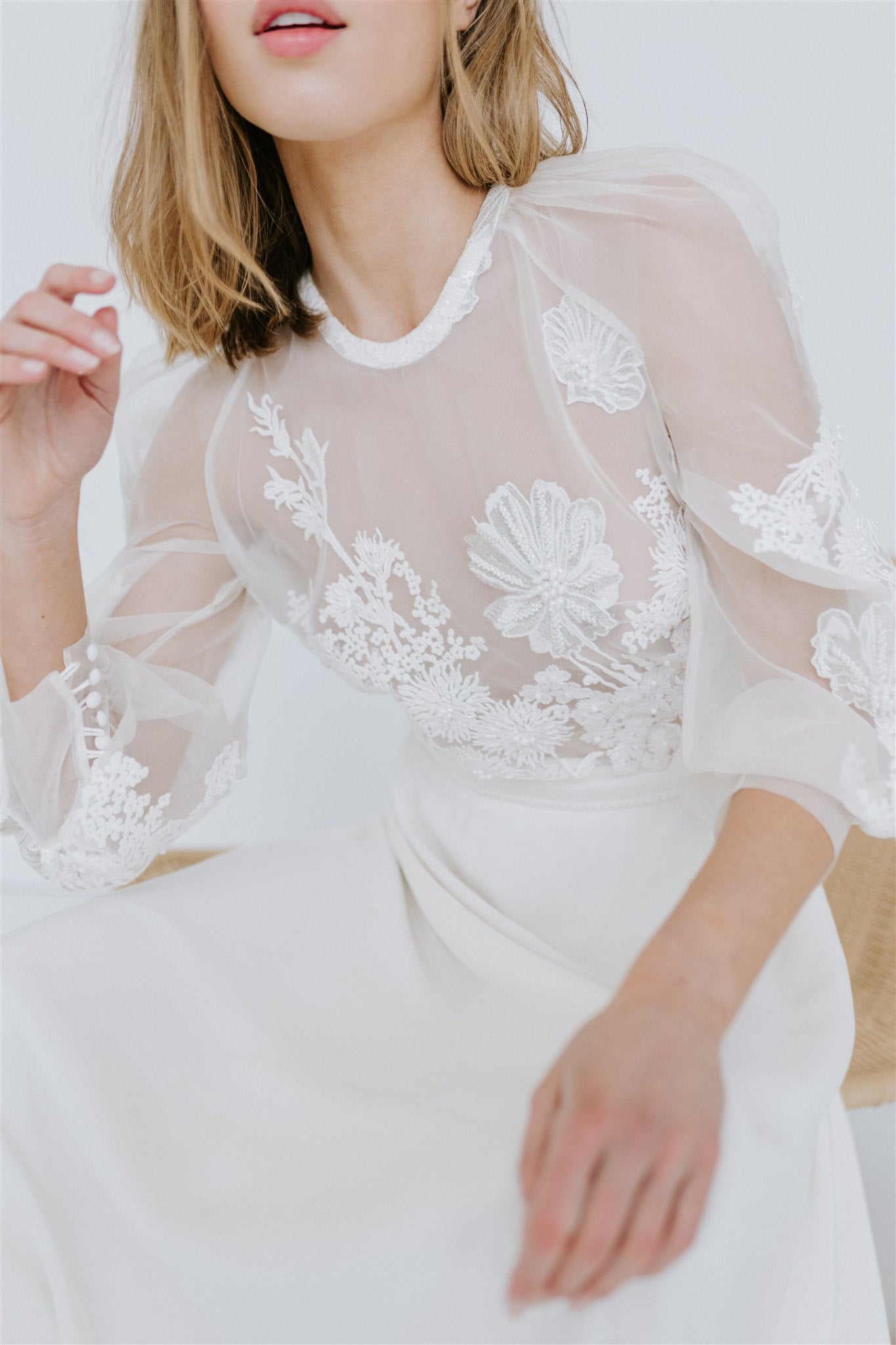
Not all wedding dresses are created equal, and neither are the fabrics used to produce them. Have you ever wondered why some garments in your wardrobe feel like a second skin—soft, airy, and effortless—while others feel claustrophobic or scratchy within minutes? The answer almost always lies in the fibre.
Your wedding dress will be on your body for a significant portion of your day. If you aren’t changing for the reception, you may be wearing your gown for ten hours or more. It is vital to get the fabric right before you even begin to consider the silhouette. At Carte Blanche Bride, our focus is always on the physical experience of the bride. You should feel as beautiful as you look, without the distraction of discomfort.
Why Natural Fibres are Non-Negotiable

When you begin your wedding dress journey, "natural fibres" should be at the top of your list of questions. It may seem obvious, but do not be fooled by the modern market. Man-made fibres are designed to mimic the look of silk and cotton, but they cannot replicate the breathability or the hypoallergenic properties of the real thing.
For our Carte Blanche Brides in Melbourne or those planning summer weddings, this is especially crucial. Natural silk and cotton allow heat to escape the body. Synthetic polyesters trap it, leading to that "sticky" feeling no bride wants to experience. Our designers, such as Cortana and Laure de Sagazan, are 100% committed to these natural materials, ensuring you feel calm and comfortable from your first step down the aisle to the final dance.
Identifying Quality: The "Shortcut" Tactics to Avoid
In my fifteen years in the luxury bridal industry, I have seen many ways quality is compromised for the sake of a lower price point. Here is what to look out for:
The Mixed Fabric Trap A common cost-saving measure is using a silk outer fabric combined with a synthetic lining. This is a fundamental error. When natural and man-made fabrics are layered, they "fight" one another, often resulting in static. There is nothing more frustrating than a beautiful skirt clinging to your legs because of a polyester lining.
Misleading "Satin" Terminology "Satin" is a weave, not a fibre. However, it is often used as a catch-all term that implies silk. In reality, a satin finish can be achieved with polyester, viscose, or silk. Always ask specifically for the fibre content. A polyester satin will feel heavy and "plastic" against the skin compared to the liquid-soft touch of a silk satin.
A Guide to Luxury Silk Fabrics

Understanding the "hand"—or the feel—of different silks will help you communicate your vision during your appointment.
What is Silk Chiffon? Silk chiffon is the lightest silk available. It is diaphanous, sheer, and offers a beautiful, ethereal drape. It is often used in layers to create movement without weight.
What is Silk Georgette? Made from crepe yarn, georgette has a slightly grainy texture and a matte finish. It is heavier than chiffon and drapes fluidly into soft ripples. You will often see this in the effortless, bohemian designs of Muse Collective.
What is Silk Crepe? Crepe is a luxurious, medium-weight fabric with a pebbly texture. It has a stunning "drop" and a subtle sheen, making it a favourite for minimalist, architectural gowns. If you are looking for wrinkle resistance, Crepe de Chine is a lighter version that travels exceptionally well for destination weddings.
What is Silk Faille? For gowns that require structure and volume—think a crisp A-line or a dramatic bow—Faille is the perfect choice. It has a characteristic ribbed surface and a "crunchy" hand that holds its shape beautifully.

Understanding French Lace: From Chantilly to Calais

Lace is perhaps the most emotive of all bridal fabrics. At Carte Blanche Bride, we celebrate the heritage of French lace-making.
-
Dentelle de Calais: This is a registered trademark for authentic Leavers lace made in Northern France. It is incredibly fine and delicate, often used by Unbridled Studio to create intricate, heirloom-quality details.
-
Chantilly Lace: Known for its fine ground and abundant detail, Chantilly is a handmade bobbin lace that feels weightless against the skin.
-
Guipure Lace: Also known as Venise lace, this is a thicker, more structural lace where the motifs are connected by "bars" rather than a net. It is bold, feminine, and holds its shape perfectly for modern silhouettes.
The Tulle Exception: When Synthetics Serve a Purpose

While we generally advocate for 100% natural fibres, tulle is the one area where a high-quality nylon often outperforms silk.
Silk tulle is breathtakingly soft, but it is also incredibly fragile. It can snag on a hangnail or a blade of grass instantly. Furthermore, it lacks "body." If you desire a veil with volume or an underskirt that provides a flare, a premium nylon tulle is the more practical and durable choice. However, for a veil that drapes like a soft mist, silk remains the ultimate luxury.
Choosing for the Australian Climate

Whether you are marrying in a sun-drenched vineyard or an urban Melbourne loft, your fabric choice should reflect your environment. Our Courte Collection offers shorter, spirited designs often rendered in breathable silks that are perfect for the modern Australian celebration.
FREQUENTLY ASKED QUESTIONS
Why should I choose silk over polyester for my wedding dress? Silk is a natural, protein-based fibre that allows your skin to breathe and regulates temperature. Polyester is essentially plastic; it traps heat and moisture, which can lead to discomfort and skin irritation on a long wedding day.
How can I tell if a wedding dress fabric is high quality? Check the lining. A high-quality gown will use natural fibres for both the outer shell and the lining to avoid static and ensure breathability. You should also feel the weight and "drape" of the fabric; silk moves with a fluid, liquid-like grace that synthetics cannot replicate.
Is silk tulle better than nylon tulle for a wedding veil? It depends on the desired look. Silk tulle is incredibly soft and drapes closely to the body, but it is very delicate. Nylon tulle is stronger and provides more "pouf" or volume. Many brides choose a high-quality nylon for its durability and structure.